How hot is a surface allowed to get?
A specification with "43°C" on one line is usually wrong. Why the allowable temperature depends on contact duration and surface material, and how to set a defensible design target.
Consumer electronics specifications often carry a single line: surface temperature ≤ 43°C. Design to that number alone and you go wrong in two directions at once — some areas end up over-designed, and some genuinely risky areas pass.
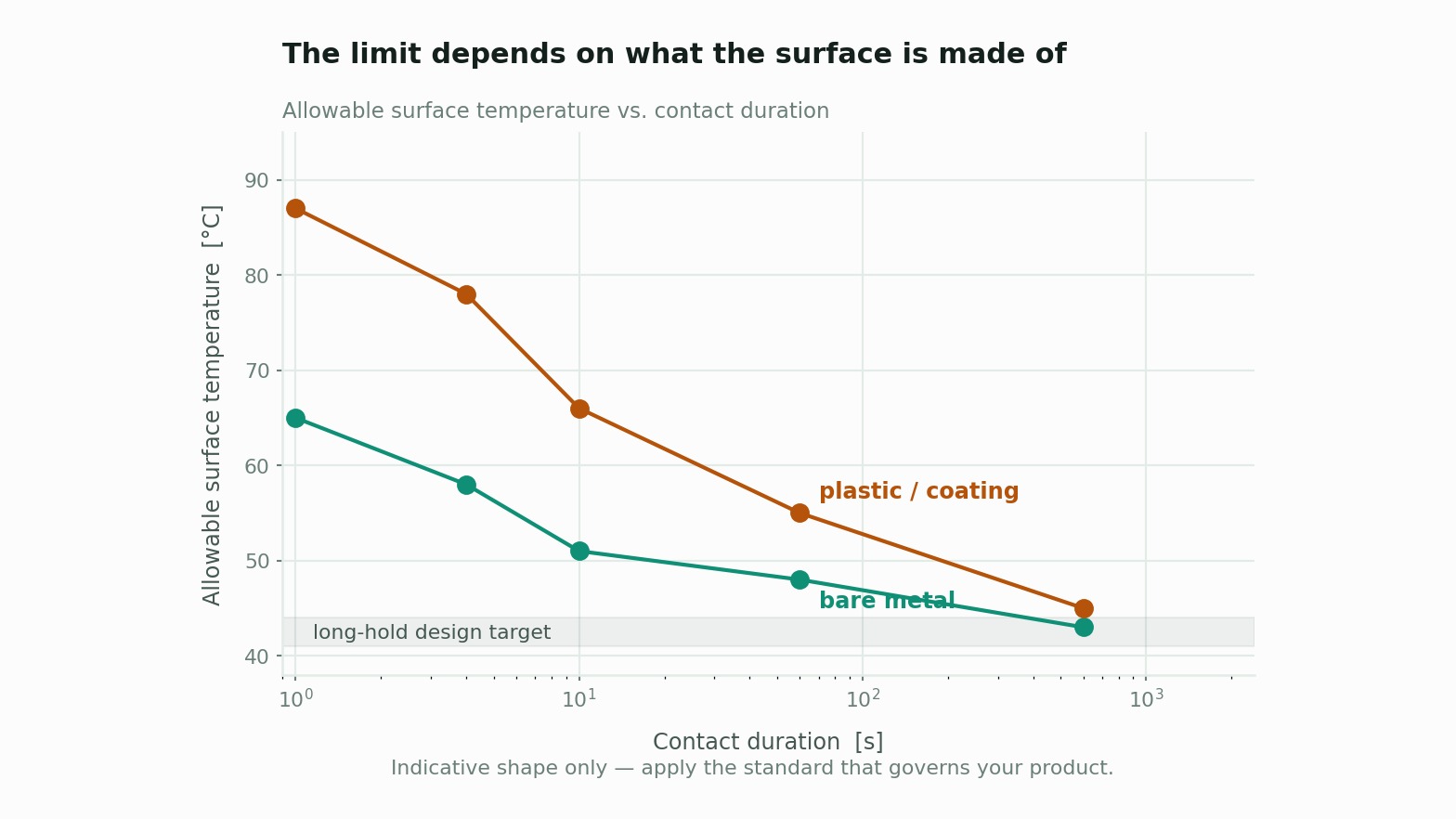
The limit is a function of time, not a single number
Skin injury is not set by temperature alone. It is set by temperature and contact duration together. A surface touched briefly can be hotter; a surface held for minutes has to be cooler.
The 43°C figure generally comes from the region where very long contact still does not cause a burn. That makes it reasonable for a grip surface. Applying the same value to an exhaust grille that a finger brushes for a second is over-design.
In practice we split it up:
| Contact scenario | Example area | Target |
|---|---|---|
| Sustained grip (minutes) | Phone side frame, handle | Strictest |
| Intermittent (seconds) | Laptop palm rest surround, top cover | Middle |
| Incidental (1–2 s) | Exhaust grille, lower rear | More headroom |
| No contact | Internal structure | Component rating only |
⚠️ The actual allowable values must come from the standard that governs your product. Applicable standards and numbers differ by product category, market, and whether children can reach the surface. This article is about the reasoning structure; it does not substitute for the standard.
Sometimes the material matters more than the temperature
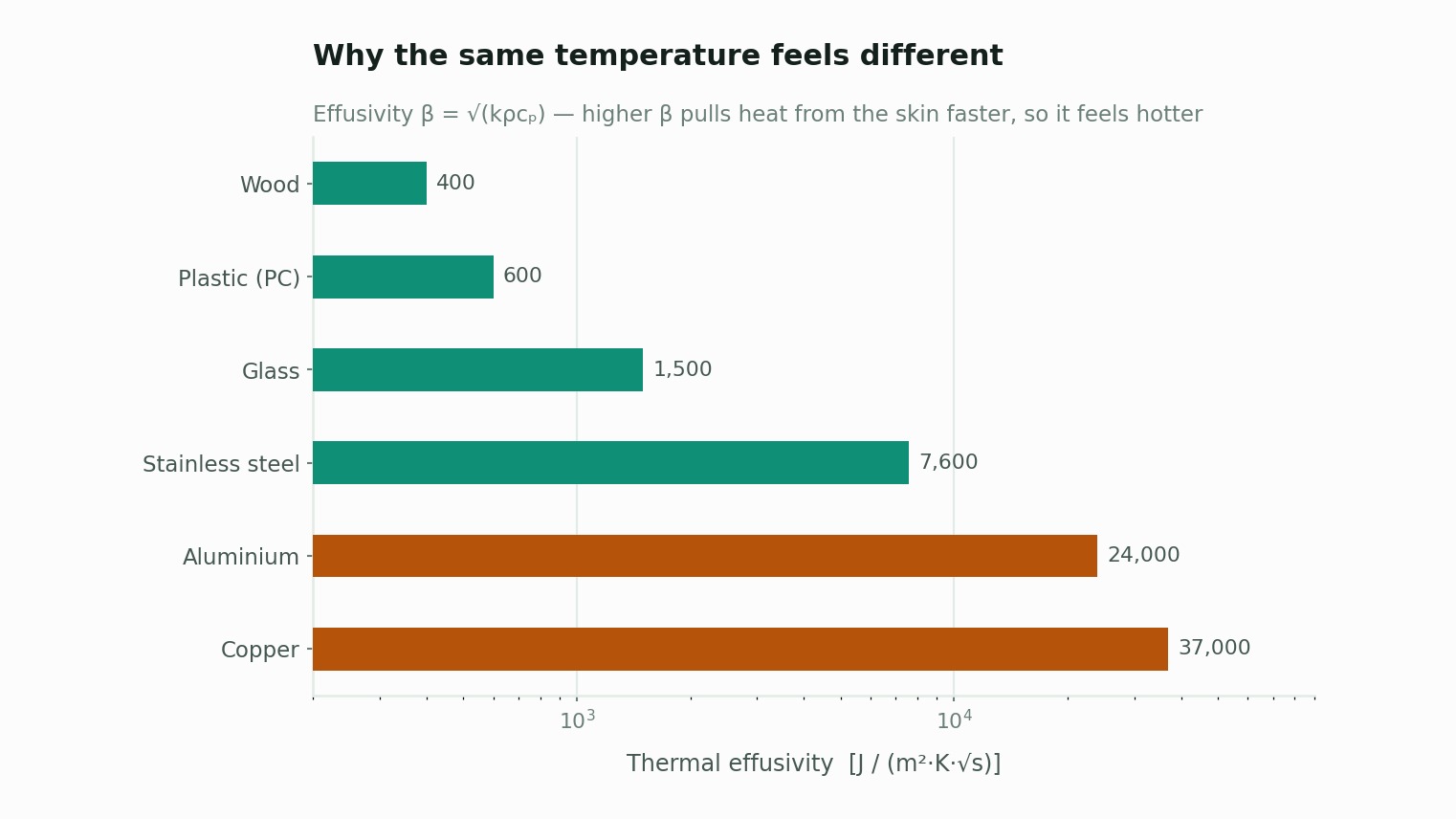
A stainless surface at 55°C feels alarming; a plastic surface at 55°C feels merely warm. Both are genuinely 55°C. What skin actually experiences is not the surface temperature but the contact temperature that forms between the two bodies at the moment of touch.
The property that governs this is thermal effusivity.
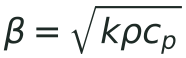
Contact temperature is close to an effusivity-weighted average of the two bodies.
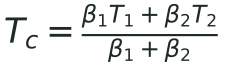
What to read out of that:
- High-β surfaces like metal pull heat out of skin quickly, so contact temperature is dragged toward the surface temperature. Surface temperature is close to what the user feels.
- Low-β surfaces like plastic or wood let the contact face itself cool on touch. Contact temperature sits closer to skin temperature, and the same surface temperature feels far less hot.
Copper and plastic differ in β by more than an order of magnitude. So changing the surface material is often cheaper and more effective than dropping the temperature a few degrees. That is why thin low-conductivity coatings, textures, and micro air gaps get used.
One caution. A low-conductivity surface layer lowers perceived temperature by also reducing heat rejection — it is, after all, obstructing the path from surface to air. Confirm you have internal temperature headroom before relying on it.
The order for setting targets
1. Define the contact scenario first
Write down who touches what, where, and for how long. Setting a temperature target before this produces a number with no basis behind it.
2. Give different areas different targets
Do not apply one value to the whole enclosure. Strict on grips, generous on incidental-contact areas — that alone buys a lot of thermal design freedom.
3. Treat material as a design variable
If temperature will not come down, look at bringing β down. Weigh it against the heat rejection penalty above.
4. Specify the measurement condition alongside the target
A target without conditions guarantees an argument at verification. State at minimum: ambient temperature, load scenario, duration, measurement location, and how IR emissivity is calibrated.
Four mistakes we see often
Managing only the single peak temperature A 1mm² hotspot and a broad surface under a whole palm carry different risk. Area and location matter alongside temperature.
Not calibrating IR emissivity Shooting a metal surface at a default 0.95 reads far too cold. Judging surface temperature on that number passes designs that should not pass.
Leaving ambient undefined 25°C room ambient and 45°C in-car ambient are completely different requirements.
Using 43°C without checking the standard The most common one. Confirm the standard that applies to your category and market, and write the specification from that.
Summary
Surface temperature is not a component-rating problem. It is a user safety and perceived-quality problem, and the criteria come from the contact scenario rather than from a datasheet.
Three things cover most of it:
- Define contact duration per area, and give each area its own target
- Treat surface material (β) as a design variable alongside temperature
- Put the target and the measurement condition in the same document
If you need help setting surface temperature targets or defining IR measurement conditions, get in touch.